Partner Offer from Kompotoi
The issues of toilets and waste are ever-present when camping and are harmful to the environment. Anyone who runs a nature-oriented campground, a RV park, or a simple tent site will sooner or later face the same question: How can restroom facilities be provided in an eco-friendly, straightforward, and cost-effective way? We’d like to introduce you to one of our partners dedicated to addressing this issue: Kompotoi
Kompotoi and Nomady share the belief that unforgettable experiences in nature and sustainability go hand in hand. With its innovative composting toilets, Kompotoi offers a simple and eco-friendly sanitation solution for nature-oriented overnight accommodations.
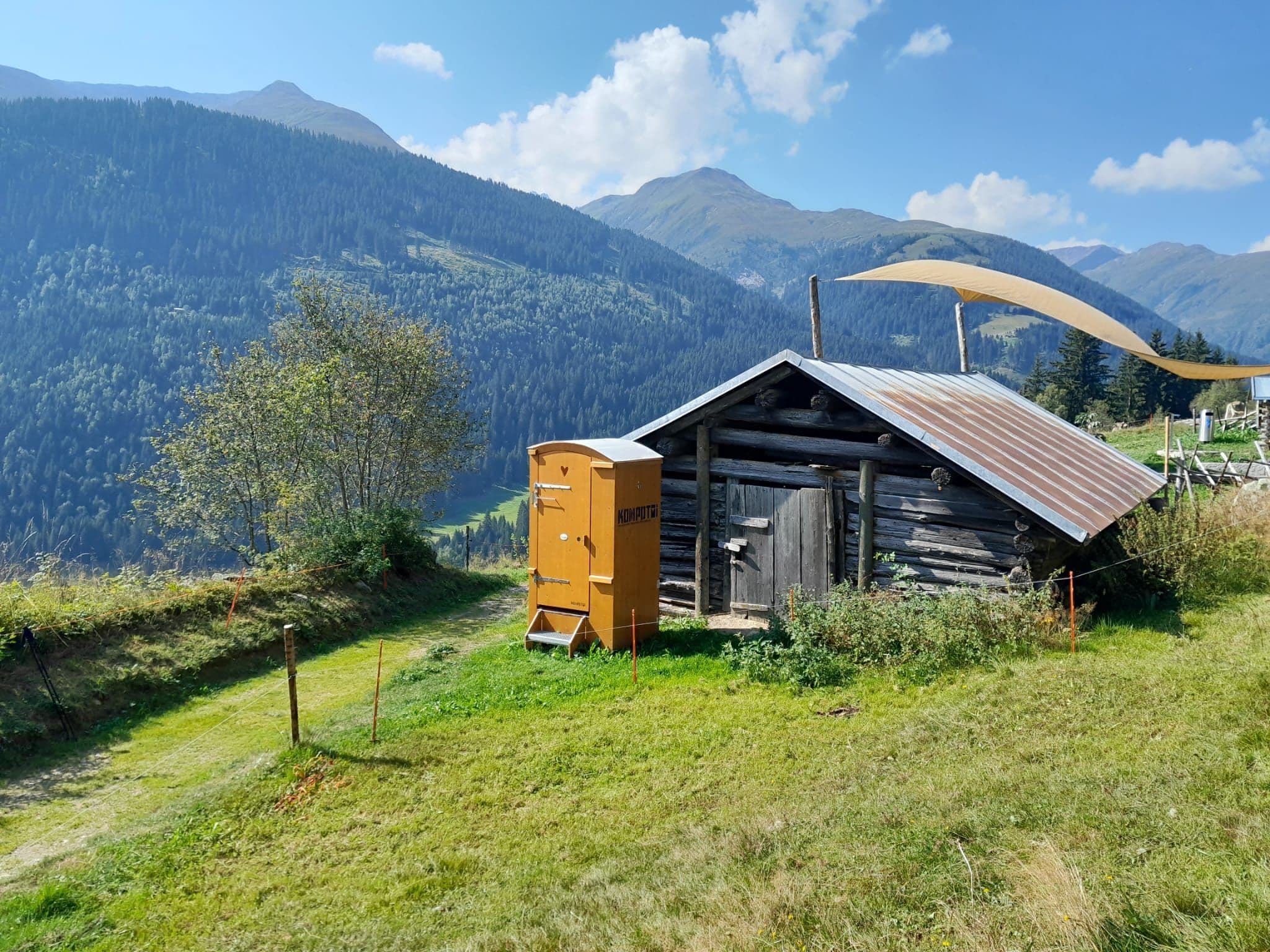
Kompotoi – Our Partner for Sustainable Sanitary Solutions
Take advantage of our partnership with Kompotoi now and get a 7% discount on the entire selection.
Discount code: NOMADY-7
Please note:
The discount applies exclusively to new customers and to first-time purchases or rentals, and cannot be applied to existing customer accounts.
Your contact for a personalized quote:
🧑💻 Daniel Oetterli
📧 daniel.oetterli@kompotoi.ch
📞 +41 44 273 30 30
Daniel will be happy to advise you personally and work with you to find the right sanitation solution for your location.
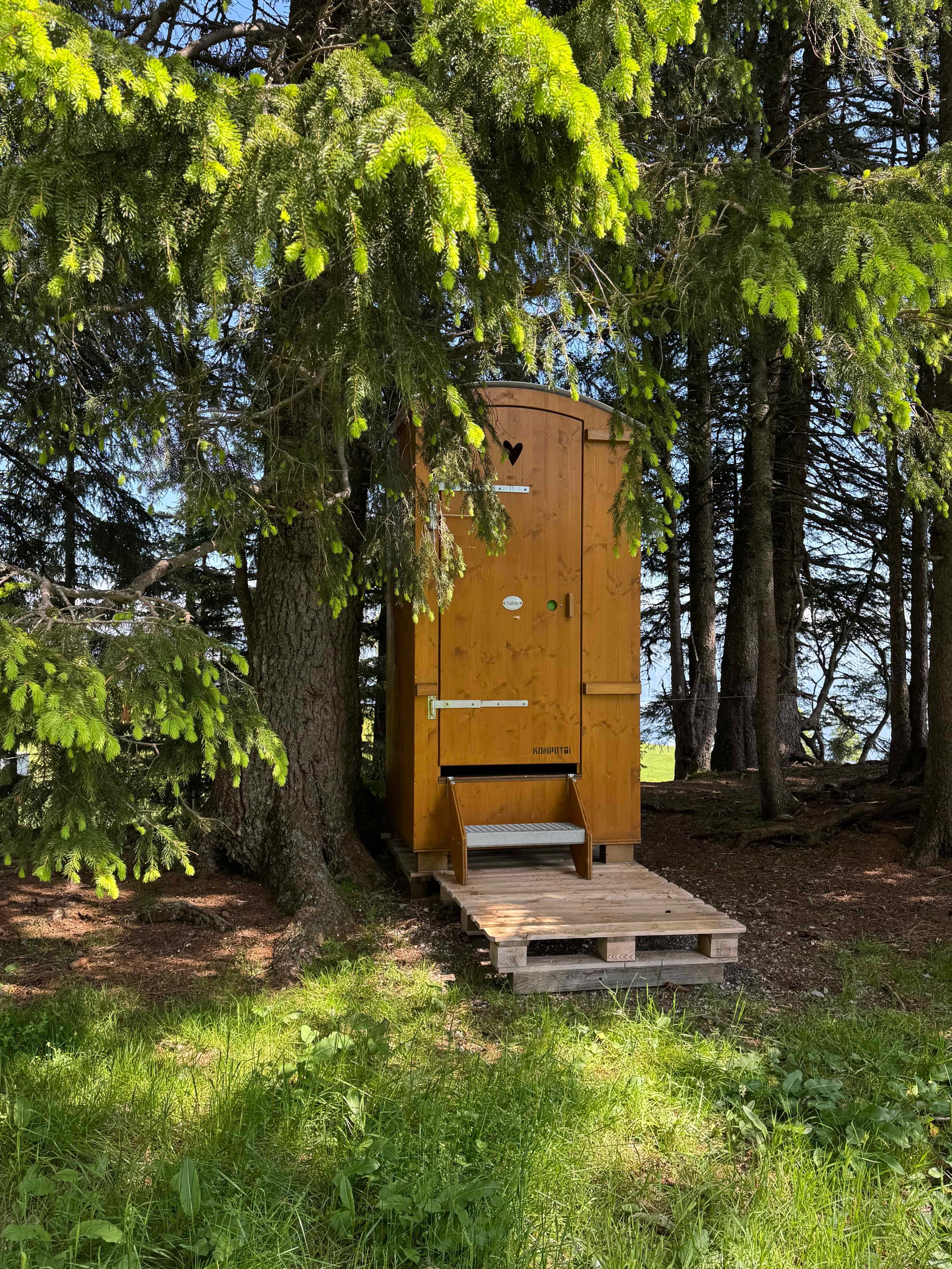
Frequently Asked Questions
A composting toilet is a toilet that operates without water, a sewer system, or chemicals. Instead of flushing away the waste, it is collected and later composted or recycled biologically.
Modern composting toilets operate on the principle of separating liquid and solid human waste, since moisture is one of the main causes of odors. With the Kompotoi, the urinal already collects a large portion of the urine separately, which results in significantly fewer odors. In the solid waste container, instead of flushing, the waste is covered with a so-called bedding material, such as wood chips. These absorb moisture and thereby eliminate any remaining odors.
The result is a hygienic and low-odor toilet solution that has proven itself for years at campgrounds, events, and nature-based lodging facilities.
How often it needs to be emptied depends on how often it is used. A Kompotoi can be used up to 500 times before it needs to be emptied. At 20 uses per day, that works out to about every 14 days. For locations with low or seasonally fluctuating usage, maintenance can therefore usually be planned well in advance.
If usage is difficult to predict, Kompotoi offers flexible service options such as on-demand maintenance. This ensures the toilet remains operational at all times without hosts having to adhere to fixed maintenance schedules.
From full-service support to self-maintenance, all service options are listed on the website.
Yes. Especially at nature-oriented campgrounds, hiking campsites, and remote campsites, composting toilets are a sustainable—and, above all, comfortable—alternative to conventional restroom facilities.
More and more guests are prioritizing sustainable travel and eco-friendly infrastructure. At the same time, many of the most beautiful nature camps are located far from existing utility lines.
Composting toilets offer a practical solution for this:
- No water, sewer, or electrical connections required
- No chemicals required
- Resource-efficient and eco-friendly
- A toilet that makes you feel good: an attractive wooden design and, when used properly, no odor emissions
- Ideal for remote locations
For hosts, this means lower infrastructure costs while still offering their guests an authentic nature experience.
No. Composting toilets operate independently of water and sewage systems and the power grid. A Kompotoi is a fully self-sufficient toilet with a well-thought-out design. Bedding replaces the water flush, and a solar lamp provides light.
Kompotoi's solutions are particularly well-suited for:
- Nature campgrounds
- Farms with campsites
- Hiking and camping sites
- Tiny houses
- Alpine huts and mountain lodges
- Glamping accommodations
- Forest and nature projects
- Outdoor event spaces
Composting toilets are a simple way to significantly increase comfort for guests, especially for Nomady hosts whose properties are often located in natural settings.
Instead of treating excrement as waste, the Kompotoi treats it as a resource. This makes the Kompotoi sustainable on several levels:
- Water: Depending on the model, a conventional flush toilet uses 6–9 liters of drinking water per flush. The Kompotoi requires absolutely no water.
- Nutrients: Human waste contains valuable nutrients such as nitrogen and phosphorus—raw materials that are urgently needed in agriculture. In conventional wastewater systems, these nutrients are largely lost. In the Kompotoi system, they can be returned to biological cycles as part of nutrient recovery, for example through the composting of solid waste.
- Energy: The production of synthetic nitrogen fertilizer is very energy-intensive. Every closed nutrient cycle helps reduce the need for newly produced fertilizers.
- Natural: In addition, the Kompotoi completely avoids the use of chemicals for odor control. Only biodegradable cleaners based on beneficial microorganisms are used for cleaning and maintenance.
Kompotoi is a Swiss provider of composting toilets for private and public use. Kompotoi develops and manufactures sustainable dry toilets made of wood that combine functionality, comfort, and sustainability. The toilets are manufactured in Switzerland and are already in use at campgrounds, municipalities, events, nature parks, and private accommodations.
The systems operate without chemicals and help conserve valuable drinking water. At the same time, they support a sustainable circular economy and reduce the ecological footprint of tourism offerings.
Kompotoi won the Swiss Ethics Prize in 2024 and the Clima Now Spotlight Award in 2025.